
When it comes to fishing for big bass, color choice isn’t something to just gloss over. It’s a key player, believe me. Those big bass aren’t just sitting there biting anything flashy that hits the water. They’re hunters relying on their visual senses to scope out potential catches.
Think about it. In the wild, these fish target certain prey based on color and movement. That’s where your bait comes in. If it mimics the natural choice of the bass’s diet in terms of hue, that can mean the difference between a promising bite and no action at all. It’s all about blending your bait with what they’d naturally chase.
The visual stimuli play a huge role. Bass are stimulated by specific shades, often the ones that signal ‘food’ to them. Having a color that’s vibrant or dull enough to catch their eye—without raising suspicion—can be the secret edge, resulting in more successful fishing trips.
Also, consider how natural prey adapt colors for survival, like the lighter bellies to blend with the sky when seen from below. Your bait needs to offer that same clever color illusion to trick bass into thinking it’s the real deal. It’s all about a good trickery of sight!
Key Considerations: Analyzing Weather and Light
Weather and light conditions don’t just affect your mood on a fishing day; they’re crucial for deciding on the bait color to use. Let’s face it, the sun won’t always be shining bright, and cloud coverage can throw off a bass’s vision.
In bright sunlight, colors look more vivid underwater, so subtler shades that don’t scream for attention can work wonders. On a cloudy day, though, you’ll want something a bit more daring to stand out in the dimmer light. Strong contrasts like blacks or blues might help get noticed.
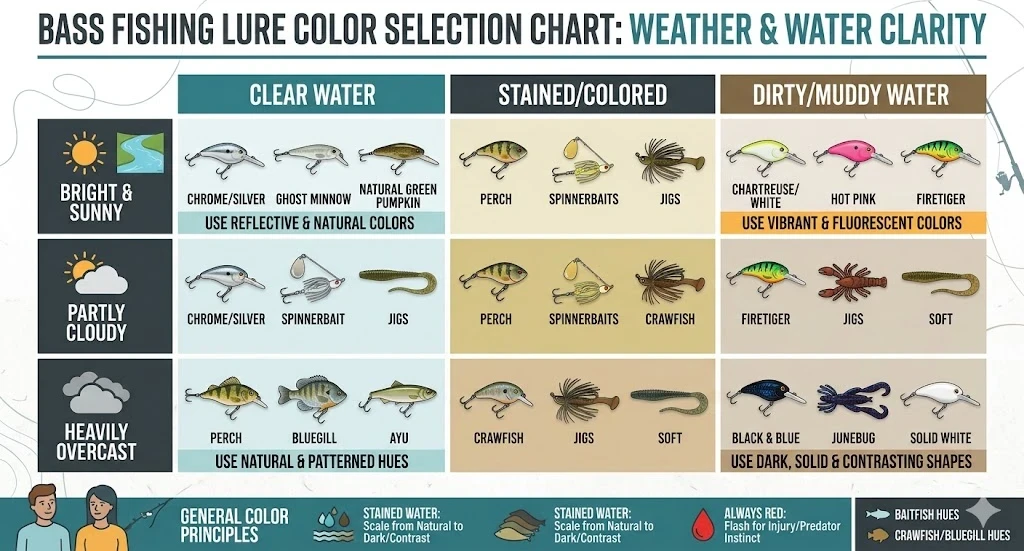
During different times of day like dawn or dusk, light levels change drastically. Early morning and late afternoon often mean slower light, so lures with metallic finishes that can reflect any available light are a smart choice. At midday, with the sun high, more muted, natural colors get a chance to shine.
Ever noticed how shadows on water can either hide or reveal baits to fish? Bass are smart. They use shadows for both hiding and hunting. So, using a bait color that can adapt to these shifting contrasts caused by weather can keep you ahead of the game. It’s like playing hide and seek, but with more finesse.
Crystal Clear or Muddied Waters: Adjusting to Water Clarity
Water clarity’s a real game-changer when picking out bait colors. You’ve got your clear days, and then there are those moments when everything’s murky; each demands different strategies.
In ultra-clear waters, every little detail of the bait counts. Bass can see it all, so subtlety becomes your best friend. More natural, less flashy tones mimic small fish they’re used to seeing, making for a convincing presentation.
When water churns up and things get muddy, it’s a whole different ballgame. Here, you need baits that shout for attention with loud, bold colors like chartreuse or neon. They create a silhouette strong enough to catch a bass’s eye even in low visibility.
Quick tip: Gather small pebbles or a tumbler of water from the lake. You’ll quickly spot if what you’re dealing with is closer to clear or murky. It’s a small step, but it gives you insight right there at the water’s edge.
The great thing is, adjusting bait color based on water clarity can transform a quiet fishing day into a busy one. It’s about matching what the environment gives you and playing smart.
Refined Sensory Cues: Seasonal Changes
The seasons do more than just change up the scenery—they also influence which bait colors could work best for enticing big bass. Each season brings its unique backdrop to the waters, affecting temperature and fish behavior.
In warmer months like spring and summer, the bass are active, and so are their natural food sources. Bright, lively colors like yellows and greens often match this abundance, capitalizing on the energy of the season’s light and activity.
When the cooler months roll in with fall and winter, conditions tend to get trickier. The bass slow down, and so does their prey’s bright appearance. Here, muted tones like browns and blacks might echo the ecosystem, helping bait blend in and fool those careful eyes that bass use when they’re less aggressive.
Temperature shifts can make fish react differently too. Colder water often means less movement, so having a bait color that complements this stillness becomes vital. You’re aiming to present your bait as the easy prey it represents—one that looks like it’s just asking to get caught.
Observing the subtle shift in environment is crucial. Couple this knowledge with your instincts and previous experiences at that fishing spot, and you’re setting yourself up for success year-round.
Putting It All Together: The Science of Perfect Color Selection
Okay, you’ve got the knowledge; now it’s time to pull it all together into a practical approach. Picking the right bait color involves a mix of observation, gut feel, and a bit of science. Consider the environment around you, from sky to water and even the season’s touch on the air.
Start by scanning the habitat. Look for clues like the prevalent colors of small fish and insects that bass might target. Mimicking these natural hues can make your bait look like a natural part of their food chain. It’s about blending into the aquatic canvas and using that to your benefit.
Your own experiences matter, too. Think about past fishing trips: What colors worked well before in similar conditions? Jot these down or keep a mental note. You’re building a personal library of bass secrets, fine-tuning as you go.
Don’t forget that a little experimentation goes a long way. Swap baits, tweak colors—you’re discovering what gets results in real-time. Note what works and what falls short. That’s the real art: constantly learning and adapting.
The best anglers stay curious and prepared. It’s about patience, keen observation, and a solid understanding of how big bass think. With these insights, you’re not just hoping for a catch—you’re anticipating it.